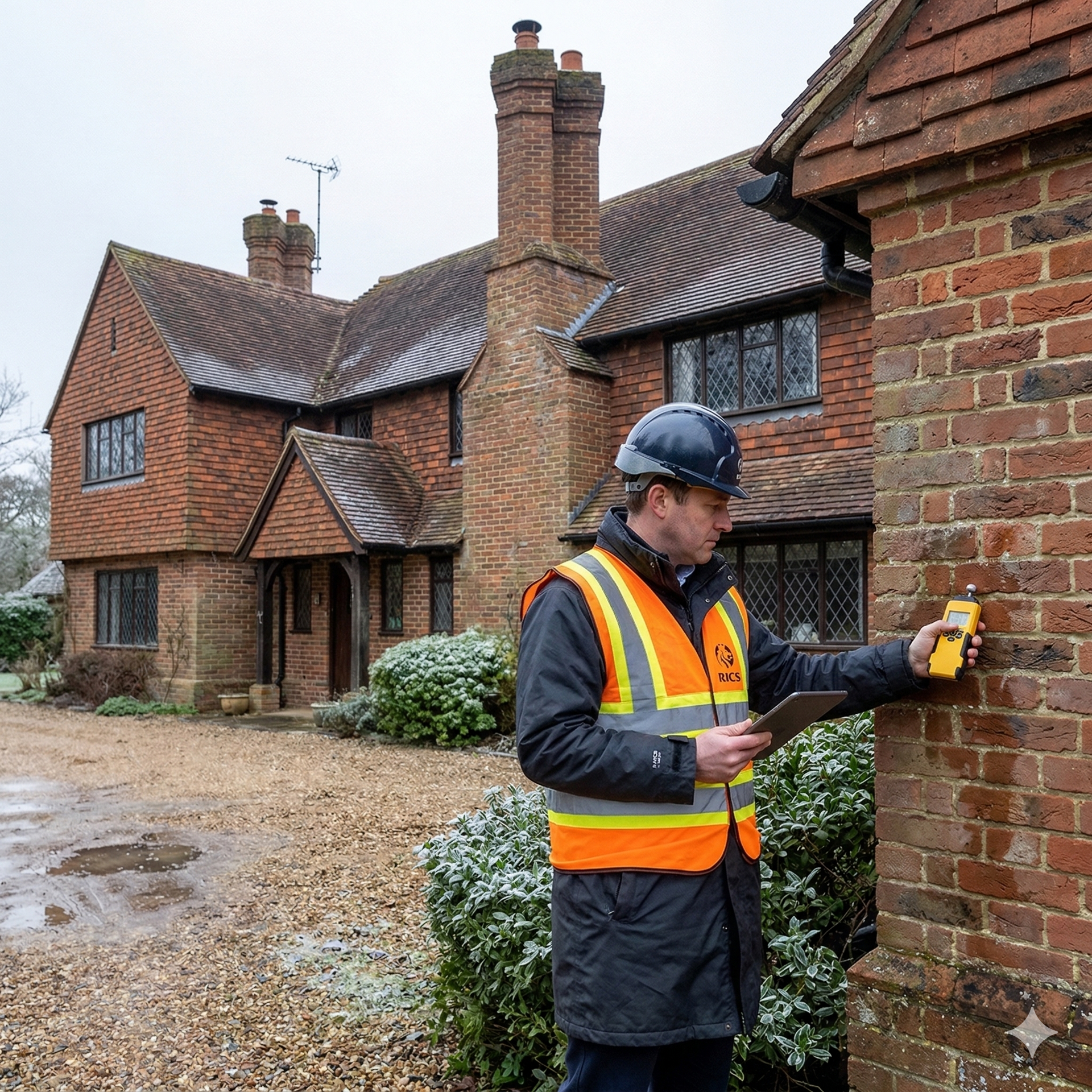
Nick Cobb Surveyors: Hidden Damp: Why May Matters for Surrey Buyers.
May is a popular month to view properties. Gardens look their best, light floods through windows, and everything feels fresh and optimistic. But beneath that spring cheerfulness, one of the most costly problems in older homes is quietly making itself known and savvy buyers in Surrey, Hampshire and Berkshire should know exactly what to look for.
After months of winter rainfall, saturated ground and cold walls, May is one of the best times of year to catch hidden damp before it becomes your problem. Here's what you need to know before you commit to a purchase.
Why May Brings Damp to the Surface.

Winter puts properties under sustained pressure. Heavy rain, frozen ground and cold masonry force moisture deep into walls, floors and structural timbers. By May, that moisture hasn't simply disappeared, it's working its way through the building fabric, and it's only just starting to show.
As ground temperatures rise in spring, absorbed moisture begins to move. Damp patches, tide marks and musty smells that were invisible in January can appear clearly by May. If you're viewing a property right now, you're actually in a strong position to spot these warning signs, provided you know what you're looking at.
The Three Types of Damp You Shouldn't Miss.

Not all damp is the same, and the cause matters enormously when it comes to repair costs. A RICS surveyor will look carefully for:
Rising damp: Moisture travelling upward through walls from saturated ground, often indicating a failed or absent damp-proof course. This is particularly common in older Surrey and Hampshire properties, including Victorian and Edwardian terraces.
Penetrating damp: Rainwater getting in through defective pointing, cracked render, leaking gutters or poorly sealed windows. After a wet winter, this can be widespread across a property's external walls.
Condensation: Often confused with structural damp but caused by warm air meeting cold surfaces. Left unchecked, it causes real damage to plasterwork and timber.
Each type has a different solution and a very different price tag. Misidentifying the cause can lead to unnecessary remedial work, or worse, leaving the real problem untreated while it spreads.
Timber: The Hidden Casualty of a Wet Winter.

Where there's damp, timber is at risk. Sustained moisture in suspended floors, roof structures and wall plates creates ideal conditions for wet rot. In more serious cases, dry rot can take hold and it can spread rapidly behind plasterwork and under floorboards, completely invisible to the naked eye.
Properties across Surrey, Berkshire and Hampshire, particularly those with older suspended timber floors, unventilated subfloor voids or traditional roof structures, are especially vulnerable after the winter just passed. A thorough survey doesn't just look at surfaces; it probes the underlying structure.
Don't Be Fooled by a Fresh Coat of Paint.

One of the most common mistakes buyers make during spring viewings is assuming a recently redecorated property is problem-free. Fresh plaster, new paint and clean skirting boards can mask tide marks, active damp and even significant timber decay. This isn't always deliberate, sellers may not know the full picture either, but it's a risk worth taking seriously.
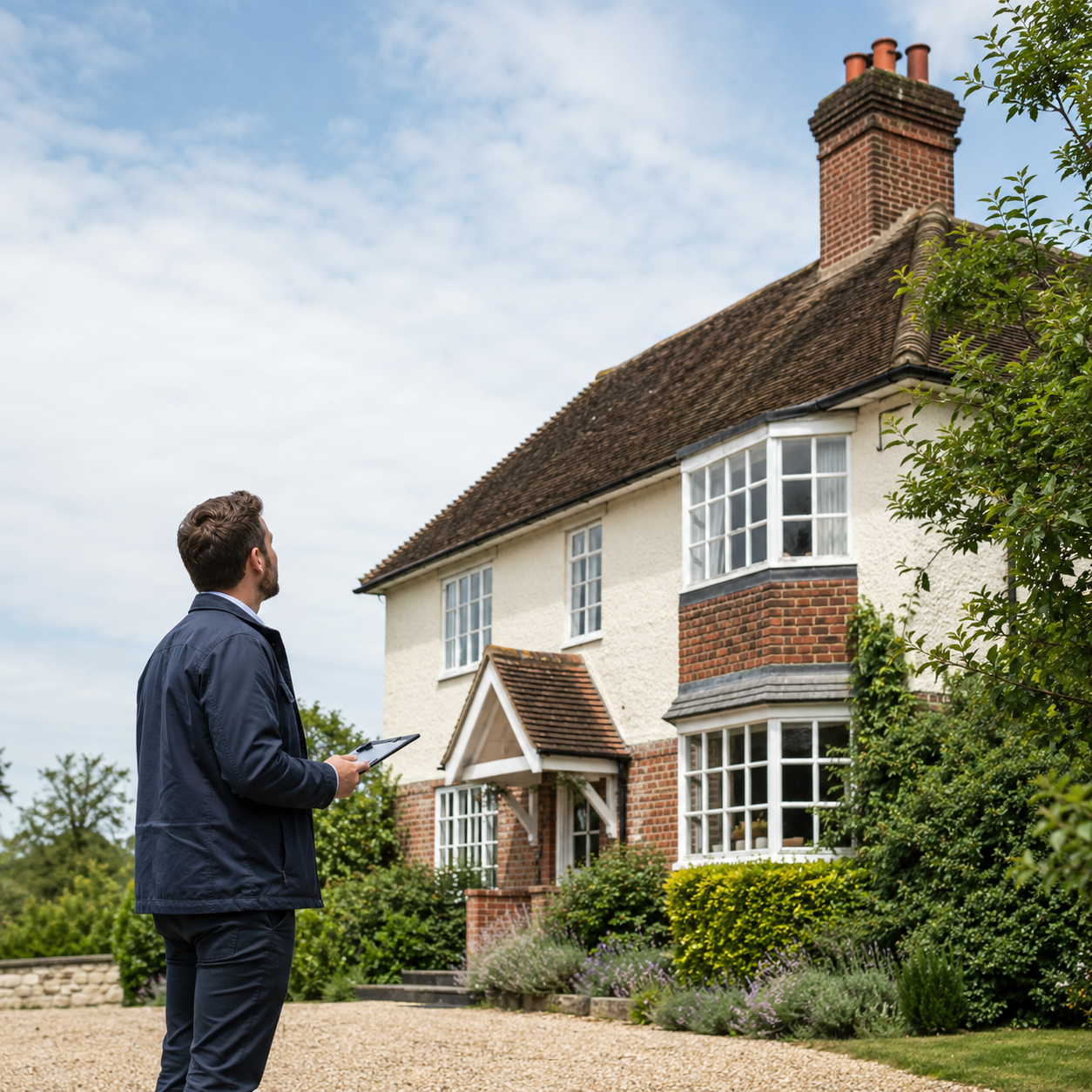
A RICS surveyor uses specialist moisture-measuring equipment to look beyond what's visible on the surface. That independent assessment is something no amount of fresh paint can replicate.
Which Survey Is Right for Your Property?

If you're buying a home in Surrey, Hampshire or Berkshire, a professional RICS survey is the most reliable way to identify damp and timber issues before you exchange contracts.
A Home Buyer Report will flag visible signs of damp, assign a condition rating and highlight areas requiring further investigation. It suits conventional properties in reasonable condition.
A Level 3 Building Survey goes considerably further. It's the right choice for older homes, properties that have been extended or significantly altered, or any home where you suspect underlying issues may exist. It provides a detailed assessment of the building's condition, including the likely causes of any damp found and their potential cost implications.
Not sure which is right for your property? See our survey comparison guide for a clear, straightforward breakdown.
Get the Full Picture Before You Commit
Damp and timber problems identified before exchange give you real options: renegotiate the purchase price, request remedial works, or simply walk away with confidence. Problems missed can cost thousands to resolve and cause serious disruption once you're living in the property.
As an independent RICS Chartered Surveyor based in Virginia Water, Nick Cobb provides thorough, impartial reports with no vested interest in whether you proceed. His in-depth local knowledge of Surrey, Hampshire and Berkshire means he understands the specific issues affecting homes in this region.
If you're currently buying a property and want an expert eye on the condition of the building, get in touch today to discuss which survey is right for you. With the spring market moving quickly, booking early means you won't lose time, or the property, while waiting.
Contact Us